
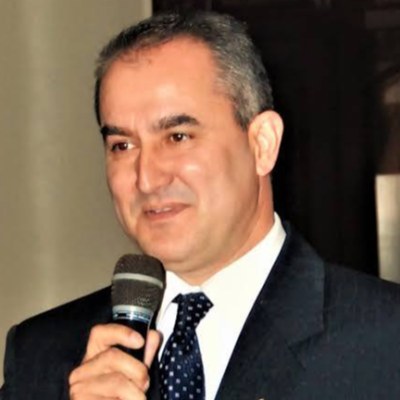
Biography
Professor Benone Păsărin is a Romanian academic and researcher affiliated with the University of Life Sciences “Ion Ionescu de la Brad” in Iași, Romania, where he has been a member of the academic staff since 1991. He is a Professor of Animal Science with more than three decades of experience in higher education, scientific research, and academic management. His professional activity encompasses several interconnected areas of animal science, including animal breeding and production management, livestock reproduction and husbandry, aquaculture, fisheries, fish farming technologies, and the sustainable utilization of animal and aquatic biological resources. Within this broad academic profile, rabbit science represents a particularly relevant area of his scientific and professional involvement. His contributions include research and scholarly publications on local rabbit breeds, rabbit production and its socioeconomic and environmental implications, exhibition standards, and the conservation and recognition of Romanian rabbit genetic resources. This experience provides a substantive foundation for his editorial activity in the field of rabbit biology, genetics, breeding, and sustainable production.
Professor Păsărin graduated from the Faculty of Animal Husbandry and Veterinary Medicine of the Agronomic Institute of Iași, now the University of Life Sciences “Ion Ionescu de la Brad”. Between September 1986 and July 1991, he completed specialized university training in animal science, graduating as an engineer in animal husbandry. He subsequently pursued doctoral studies at the same institution, obtaining his PhD in Agricultural and Forestry Sciences, in the field of Animal Science, in 1997. His academic training provided a foundation in animal biology, breeding, production technologies, and the scientific management of livestock systems, which have remained central to his subsequent teaching and research activities.
His university career began in 1991, when he joined the academic staff of the institution in Iași. He progressed through the academic positions of university teaching assistant, lecturer, and associate professor, attaining the rank of full professor in 2007. Throughout his academic career, he has combined teaching responsibilities with research activities, participation in scientific projects, the development of experimental and production methodologies, and the preparation of academic publications and university teaching materials. His long-standing affiliation with the University of Life Sciences in Iași has allowed him to contribute continuously to the development of animal science education and research in Romania.
An important component of Professor Păsărin's academic activity has been his involvement in university administration and institutional development. He served as Chancellor of the Faculty of Animal Husbandry between 2004 and 2008 and subsequently as Dean of the faculty from 2008 to 2016. He also held the position of Vice-Rector of the university, contributing to institutional governance and the coordination of educational and academic activities. His subsequent responsibilities have included university quality assurance management. He has also been involved in doctoral education and scientific supervision since 2009, contributing to the advanced training of researchers in animal science and related disciplines.
Professor Păsărin's scientific interests are particularly associated with animal breeding, livestock production technologies, reproductive management, and the biological and technological factors influencing animal productivity. One of his established areas of expertise concerns swine breeding and production management, including the evaluation of production systems, reproductive performance, husbandry practices, and the optimization of livestock production. His broader research perspective emphasizes the relationships between animal genetics, biological performance, management conditions, and the efficient utilization of agricultural resources.
His professional and scientific involvement in rabbit science predates his recent publications on Leporidae genetics. In 2011, he co-authored the chapter “Small-scale rabbit production: a solution for limited-resource rural and suburban populations and its impact on the environment”, published in the volume Environmental Issues in the Context of Sustainable Development. The contribution examined small-scale rabbit production as a potentially accessible livestock activity for rural and suburban households with limited resources, while also considering its environmental implications. It situated rabbit husbandry within a broader discussion of sustainable development, highlighting the relevance of small-scale animal production to household-level resource use, agricultural diversification, and rural livelihoods.
In 2012, Professor Păsărin co-authored another contribution directly addressing rabbit production and genetic resources: “Local Rabbit Breeds and Research Prospects to Develop and Increase Rabbit Meat Production and Consumption in View of Romanian Rural Space Sustainable Development”, published in the volume Agri-Environment: Perspectives on Sustainable Development. This work addressed the importance of local rabbit breeds and the research prospects for improving rabbit meat production and consumption in Romania. It connected the conservation and utilization of local genetic resources with breeding development, productive performance, and the socioeconomic sustainability of rural areas. These publications demonstrate an established interest in the relationship between rabbit genetic resources, production development, and the practical requirements of sustainable cuniculture.
A further contribution to the development of rabbit science in Romania concerns the standardization of exhibition assessment. In 2011, Professor Păsărin co-authored the article “Proposal of standard for the judgement of the exhibition Transylvanian Giant Rabbit”, published in Animal Biology & Animal Husbandry. The paper presented a proposal for standardized judging criteria for the Transylvanian Giant Rabbit, addressing an important aspect of breed characterization and the consistent evaluation of animals in exhibitions. Standardization of breed assessment is relevant not only to exhibition practice but also to the definition and preservation of breed-specific phenotypic characteristics. This work therefore forms part of his broader involvement in the development and recognition of rabbit genetic resources.
One of the most significant initiatives with which Professor Păsărin has been associated is the conservation and official recognition of the Transylvanian Giant Rabbit (Uriașul de Transilvania), recognized as the first Romanian rabbit breed. He was a member of the collaborative team involved in the breed's certification and recognition process, working alongside I. Valentin Petrescu-Mag and other researchers and collaborators. This initiative aimed to conserve Romanian rabbit genetic resources through the establishment and recognition of a distinct national breed. The work brought together activities related to breed development, phenotypic characterization, selection, documentation, and the preservation of a locally developed rabbit population. In 2013, the collective work entitled “Conservarea genofondului românesc prin omologarea primei rase românești de iepuri: Uriașul de Transilvania” received a Diploma of Excellence and a Bronze Medal at the 11th edition of the International Invention Salon PRO INVENT in Cluj-Napoca. The event was organized by the Technical University of Cluj-Napoca and Expo Transilvania, under the auspices of the Romanian Ministry of National Education and the Romanian Academy of Technical Sciences, Cluj Branch. Professor Păsărin's participation in this collaborative initiative represents a particularly relevant element of his professional profile in rabbit science, as it connects animal breeding and selection with the conservation, characterization, and recognition of national animal genetic resources.
In recent years, Professor Păsărin has also extended his scientific publishing activities to the evolutionary and genetic aspects of the family Leporidae. An important contribution in this direction is his first-authored review article, “Genetics of Leporidae: Phylogeny, diversity, and evolutionary dynamics”, published in Rabbit Genetics in 2025. The paper examines the evolutionary history and genetic diversity of rabbits and hares, with particular attention to molecular phylogeny, population genomics, introgressive hybridization, domestication, adaptive genetic variation, and the evolution of immune-related genes. It discusses how modern genomic approaches have improved the understanding of evolutionary relationships within Leporidae and how genetic exchange, natural selection, and domestication have contributed to the diversification of these mammals. The article also considers the relevance of phylogenetic and genomic research to taxonomy, animal health, biodiversity conservation, and the management of genetic resources. This contribution demonstrates his engagement with contemporary research literature on leporid genetics and evolutionary biology and complements his earlier practical and applied involvement in rabbit breeding and genetic-resource conservation.
His involvement in rabbit-related research also extends to the environmental and agricultural dimensions of rabbit production. In 2025, he co-authored the review article “Rabbit manure as a feedstock for substrate (soil surrogate) production: recent advances and applications”, published in Rabbit Genetics. This interdisciplinary contribution examines the potential of rabbit manure as a renewable biological resource for producing horticultural substrates, growing media, and soil substitutes. The review addresses the properties of rabbit manure and the potential of different processing technologies, including composting, vermicomposting, insect-assisted biodegradation, pyrolysis, and hydrothermal carbonization. It also discusses the agricultural and environmental applications of manure-derived materials, particularly their potential to replace peat-based substrates, improve soil properties, support nutrient recycling, and contribute to circular bioeconomy strategies. His participation in this publication reflects an interest in the sustainable utilization of rabbit production by-products and the integration of animal production with environmental management and resource recovery.
Taken together, these contributions illustrate the breadth and continuity of Professor Păsărin's involvement in rabbit science. They encompass several complementary dimensions: the development and evaluation of local rabbit breeds, the conservation of national genetic resources, the standardization of exhibition assessment, the role of rabbit production in rural development, the evolutionary genetics of Leporidae, and the environmental valorization of rabbit manure. Particularly noteworthy is his participation in the collaborative initiative that led to the recognition of the Transylvanian Giant Rabbit, which gives his profile a direct connection to applied rabbit breeding and the conservation of a nationally developed breed. His publications and collaborative activities therefore extend beyond a general background in animal science and demonstrate engagement with specific scientific and practical issues relevant to rabbit research.
Another important area of his professional activity is aquaculture and fisheries science. His teaching and research interests include fish breeding and rearing, specialized aquaculture, aquaristics, fisheries management, fishing equipment and techniques, and the sustainable exploitation of aquatic biological resources. This experience has strengthened his interdisciplinary understanding of animal biology, production technologies, environmental conditions, and the management of renewable biological resources. His academic involvement in fishery techniques and aquatic production systems also reflects his interest in the biological and technological dimensions of animal production beyond terrestrial livestock.
Professor Păsărin's international academic development has included postgraduate training in animal bioethics, organic agriculture, agricultural management, and educational methodologies. In 2002, he attended specialized training in animal bioethics at the Institut National Polytechnique de Lorraine, École Nationale Supérieure d'Agronomie et des Industries Alimentaires, in Nancy, France, followed by further training at Aristotle University of Thessaloniki, Greece, in 2004. He subsequently attended professional courses in organic agriculture certification and inspection in Bologna, Italy, including training organized by the Institute for Ethical and Environmental Certification. His additional professional development has included agricultural management and marketing and open and distance learning technologies. These experiences have contributed to his broader understanding of animal welfare, responsible production, agricultural sustainability, and the institutional requirements of modern agricultural education.
His professional engagement also encompasses international scientific and advisory activities related to food security and sustainable agricultural development. Institutional documentation has identified his participation in the High Level Panel of Experts on Food Security and Nutrition (HLPE-FSN), established within the framework of the United Nations Committee on World Food Security. His professional activities have also included scientific peer-review responsibilities for international journals, including Food Control. These experiences have provided additional opportunities for engagement with scientific evaluation, interdisciplinary research, and the dissemination of scientific knowledge.
As a university professor, Professor Păsărin has contributed extensively to undergraduate and postgraduate education through teaching, the development of specialized courses, the preparation of academic materials, and doctoral supervision. His teaching activities have covered animal breeding and production, swine husbandry, aquaculture, fish farming, fisheries management, and animal production technologies. His academic approach emphasizes the relationship between fundamental biological principles and their practical applications in agricultural production. Through his involvement in doctoral education, he has contributed to the development of research competencies and the preparation of specialists in animal science and related fields.
Professor Păsărin is also involved in the international scientific publishing community as an Editor of Rabbit Genetics, an international journal dedicated to rabbit biology, genetics, breeding, reproduction, production, health, and related aspects of lagomorph science. His editorial involvement is supported by a combination of broad academic experience in animal science and specific contributions to rabbit research and breeding. These include publications on local rabbit breeds and sustainable production, the proposal of exhibition judging standards for the Transylvanian Giant Rabbit, participation in the collaborative process leading to the recognition of the Uriașul de Transilvania breed, and more recent contributions to the evolutionary genetics of Leporidae and the sustainable utilization of rabbit production by-products. This combination of applied breeding experience, genetic-resource conservation, and interdisciplinary scientific publishing provides a relevant perspective for the evaluation of research addressing both fundamental and applied aspects of rabbit science.
Overall, Professor Benone Păsărin's academic profile is characterized by extensive experience in animal science, university teaching, research, doctoral education, and academic administration, together with a sustained involvement in rabbit-related research and development. His professional background encompasses livestock breeding and production management, aquaculture, fisheries, rabbit breeding, local genetic-resource conservation, and sustainable animal production. His participation in the development and recognition of the Transylvanian Giant Rabbit, in particular, represents a significant contribution to the conservation and promotion of Romanian rabbit genetic resources. Combined with his publications on rabbit production, breed assessment, Leporidae genetics, and the environmental valorization of rabbit manure, this experience provides a substantial and relevant foundation for his editorial activity in Rabbit Genetics. His continued academic activity at the University of Life Sciences “Ion Ionescu de la Brad” in Iași and his contribution to the journal reflect his engagement with scientific education, animal breeding, genetic-resource conservation, and the dissemination of knowledge in rabbit biology and production science.